home   home

Art's Official Intelligence

First stirred by striking, graphic boldness,John and Barbara Wilkerson became enamored with every detail of the early Aboriginal paintings from Papunya. But as they now share their journey with the world, layer after layer of meaning reveals a captivating people and culture — ones we might not otherwise know

By Tim Vitale '92, photography by Max Gerber


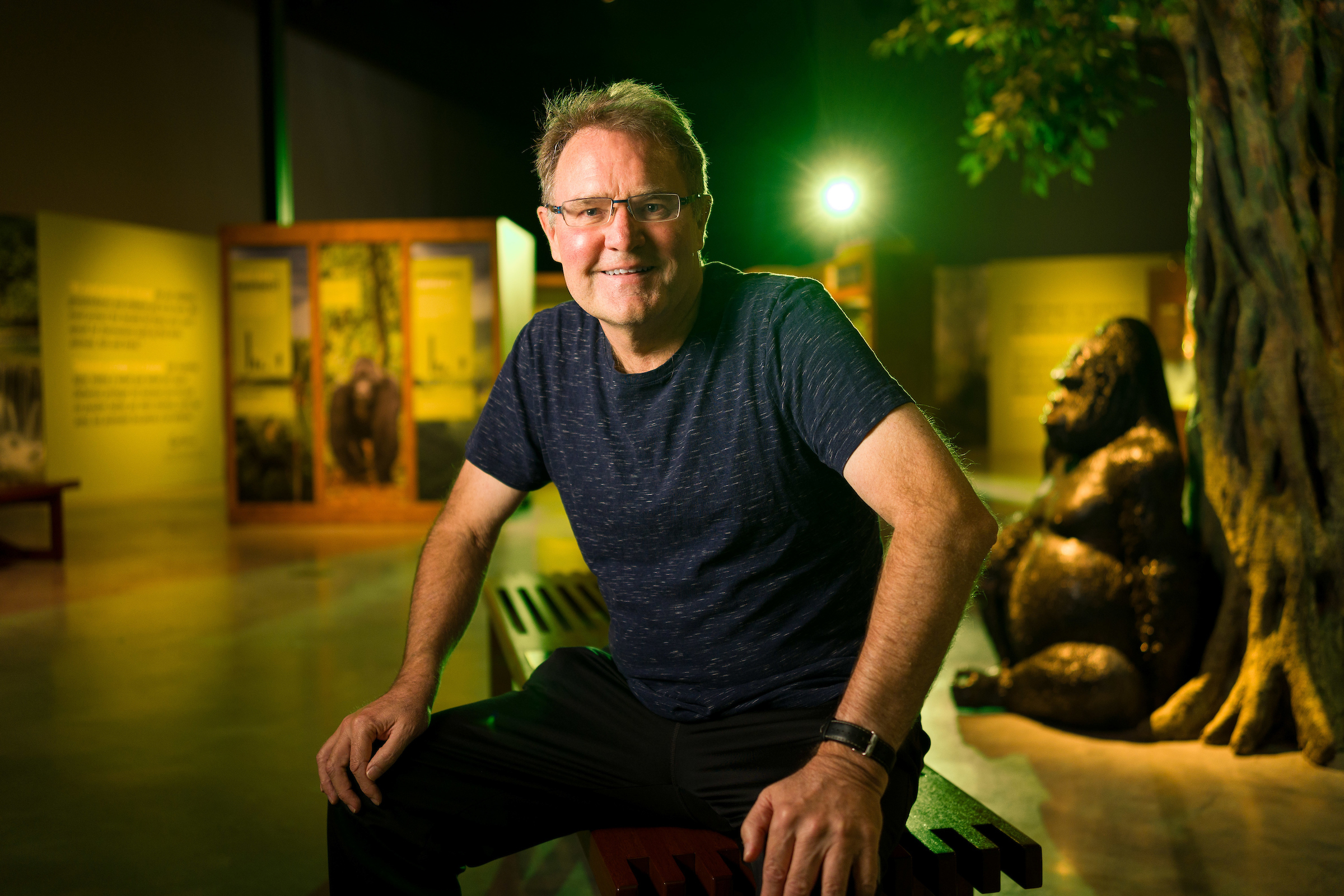
YOU DON'T HAVE TO HEAR WORDS from John Wilkerson's mouth to understand his affection for art — art he owns, in the case of today's museum tour.


Wilkerson '65 is just inside the doors of a pre–opening event for 49 works he and his wife, Barbara, are showing in Los Angeles at UCLA's Fowler Museum. Forty nine paintings of aesthetically evocative, richly spiritual and historically significant works of early Australian Aboriginal art gathered by the Wilkersons into this show, “Icons of the Desert: Early Aboriginal Paintings from Papunya,” a show compared by one art historian as having the impact of Picasso's introduction to the world in New York City in 1939.


Wilkerson is radiating what looks to be fatherly pride. Or you could think that it's, say, justifiable owner's pride as you watch him scan this vivid display the Fowler's curators have assembled: the spot lighting, the arrangement of the pieces, the art works themselves, the way the path through the exhibit surprises you, even stuns you, around the next corner, the story — explanations of what all this means. Wilkerson is taking photographs, it seems of his kids and their friends, surprising given that these “kids” are his to see every day.


But it is clear that this is not fatherly pride, and this definitely is not pride of ownership. It is not pride at all by any means. You are witness to a true and deep love affair. That love is obvious in his permanent smile, in his concentration on every exhibit detail and, eventually, in the explicit words themselves. “It is an act of love,” he says, explaining his passion for the project. Not just for the pieces — although surely each piece has a place in his heart too — but it is the totality of his and Barbara's shared experience with the works and their accompanying richness of story that have engendered such love. “This collection has become a journey, something best explained in terms of intimacy, an act of love with your best friend.” The life of this compiled package of art is a journey he doesn't want to end. He's already envisioning, wanting a next chapter, which, given the public response so far, surely awaits.


The exhibit's owners are not its only fans, maybe not even its most vociferous, with the eyes of the world now focused, “Icons of the Desert” has received rave reviews from critics in Australia and, now that it is showing in its third U.S. museum, the enthusiastic accolades pile up. Paired as it is at the Fowler with a second show of collector Richard Kelton's later–period western Australia desert paintings, one review in the L.A. Weekly described the exhibit like this:


“The result is an unparalleled object lesson in a particular moment of art history, a breathtaking display of human visual invention, and one of the most moving and aesthetically revolutionary painting shows — Western, non–Western, whatever — I've ever seen.”


That sounds like love, too. But Wilkerson points out that one must take care in love, perhaps especially in the love of expensive art. “When you first fall in love, you like everything, and that's dangerous.” He and Barbara — both permanently stricken with the “collector's gene” throughout their 40–plus years of marriage — loved the work of Aboriginal artist Johnny Warangkula from the first minute they set eyes on it in the mid–1990s. So they had to tame their love–it–all eyes, to focus, and their resolution of focus meant that they would pursue what are called the “early boards,” the first paintings crafted in a short period, 1971–1972, in the small settlement of Papunya in the vast desert of central Australia.


The art from Papunya

In fact, it is Warangkula's “Water Dreaming at Kalipinypa” that in most people's eyes is the centerpiece of the entire exhibit. The work made headlines two times when it sold for world–record auction prices in 1996 and again in 2000. “Water Dreaming” is one of the approximately 600 works produced at Papunya, a government–built Aboriginal relief camp where a Sydney–trained schoolteacher, Geoffrey Bardon, decided in 1971 to teach the senior men of the camp to paint their stories. Bardon gave them the painting tools and encouraged them to transfer their personal, ancestral stories, or dreamings, on to the Masonite boards that were widely available to them back then. Less than two years later, the result was a unique and visually appealing body of work that offers insights into the ceremonial Aboriginal stories never before catalogued visually on anything permanent.


The works have a compelling aesthetic distinctiveness that make them immediately appealing, says Roger Benjamin, “Icon” project curator and research professor in art history at the University of Sydney. So it is not just curiosity of culture that draws people to them; there is an undoubted aesthetic strength to them also.


Tour “Icons of the Desert”


But the works also offer a glimpse into the ethnography of a fascinating people, says Benjamin, a native Australian. “These are the histories of our very people.”


“These paintings didn't come out of nothing. They are the physical translation of a series of complex stories into modern times.” They are the modern adaptations of long–practiced ground paintings, ceremonial body paintings, of ancestral stories interwoven into unwritten songs, or “songlines,” that were the communication tools the Aboriginal people used to pass along their histories. “The Aboriginal men had entitlement to particular ‘dreaming’ stories, their own family stories,” Benjamin says. Bardon asked the men to transfer these stories with paint onto the boards, and so began the dawn of the desert painting movement, which has now become more than 50 percent of an Australian art market with beginnings only in 1971.


So the term “early boards,” if you are trying to date the genesis of Aboriginal art, is both accurate and a misnomer of geologic proportions. These are, in fact, the earliest works put on paper (on these Masonite boards, to be truly precise). But “early” in Aboriginal art pre–dates the 1971–72 pieces by millennia — the Aboriginal people were painting thousands of years before the earliest cave paintings found in Europe. “Aboriginal culture,” says Benjamin, “is the longest continued culture in human history.”


–more–