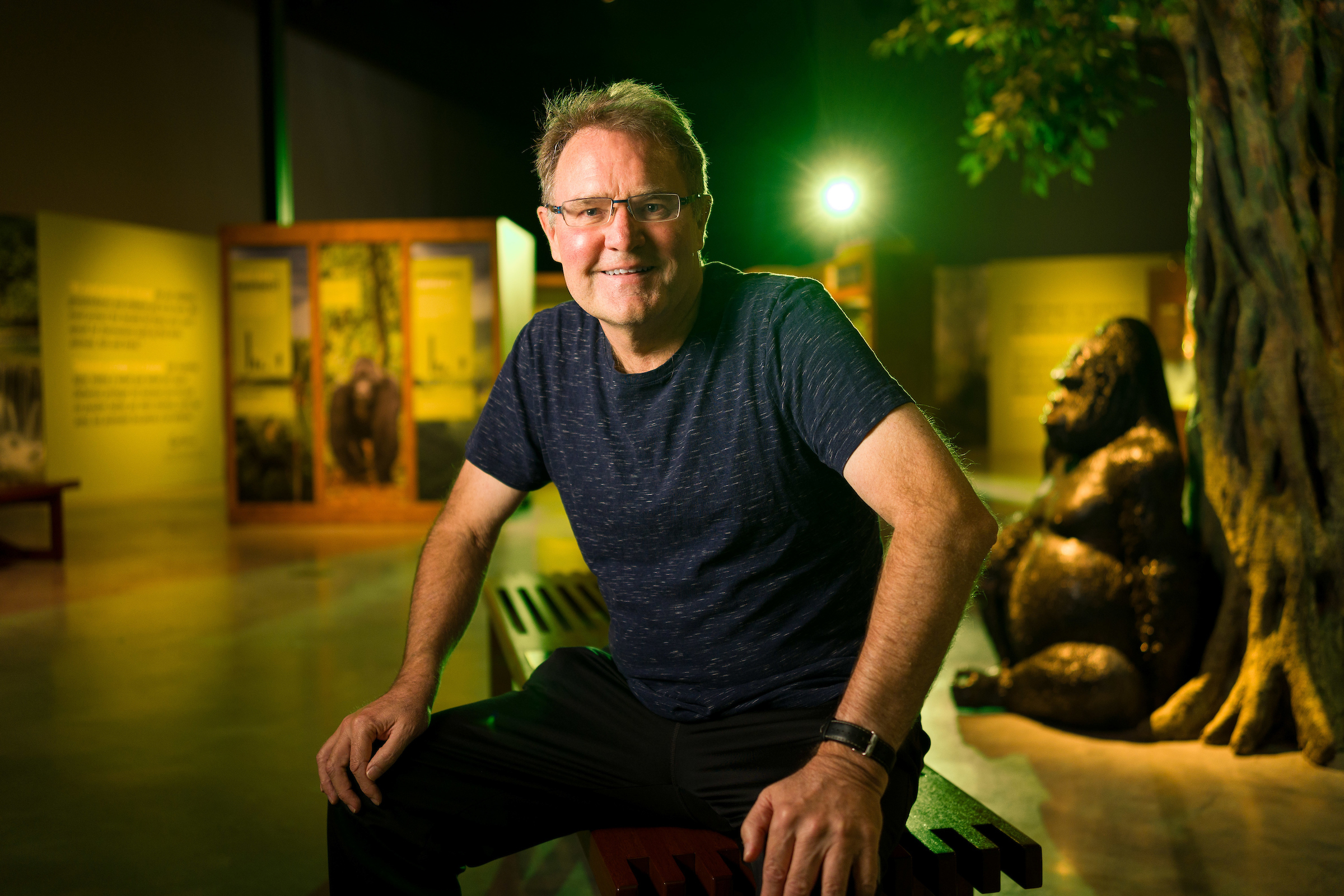
With multiple trips overseas every year, Paul Larsen personifies the hope of USU's land-grant mission as he changes lives and national economies one apple at a time.
AS THE SUN RISES over Lebanon, an older American couple is driven through the city of Beirut, up over the mountains and into the beautiful but dangerous Bekaa Valley. They stop at an open-air café, where, along with their driver and interpreter, they relax and order breakfast. Without warning, a long black car screeches around the corner and slams on its brakes directly in front of them. A young man leaps out, rushes to their table, and shouts, “I saw you getting out of the car, and I knew you were back in Lebanon!”
Word travels quickly through apple growers here when these particular Americans arrive: “Larsen is back!” And then this young grower sat down to breakfast with his beloved friends from Logan, Utah. Lebanon may not usually be associated with Utah, or with apples for that matter, but they are actually closely related. Ten years ago, Lebanon was trying to rebuild after many years of civil war. Its once-thriving apple industry was essentially destroyed after falling behind the evolution of agricultural science and losing its markets. No one could have guessed that its salvation would come through a humble 81-year-old man from Logan, who began in 1998 to reshape and restore what was thought to be lost.
Dr. Paul Larsen '50 earned his undergraduate degree at USU; after receiving his doctorate at Michigan State, he returned to USU as Vice President of Extension and Continuing Education, serving from 1982 until 1992, when he officially retired.
Retirement, however, has never stopped Larsen from working with energy and enthusiasm all over the world with his wife, Lorna. They have worked in Armenia, Macedonia, China and other countries on similar efforts. After arriving in Lebanon 10 years ago in response to a call for help with the apple industry, Larsen rapidly assessed every aspect of production by traveling through the country conducting detailed analyses. He plunged into this unwieldy task and handled it deftly, outlining every aspect of the industry's problems and how they could be solved with the adoption of modern orchard practices.
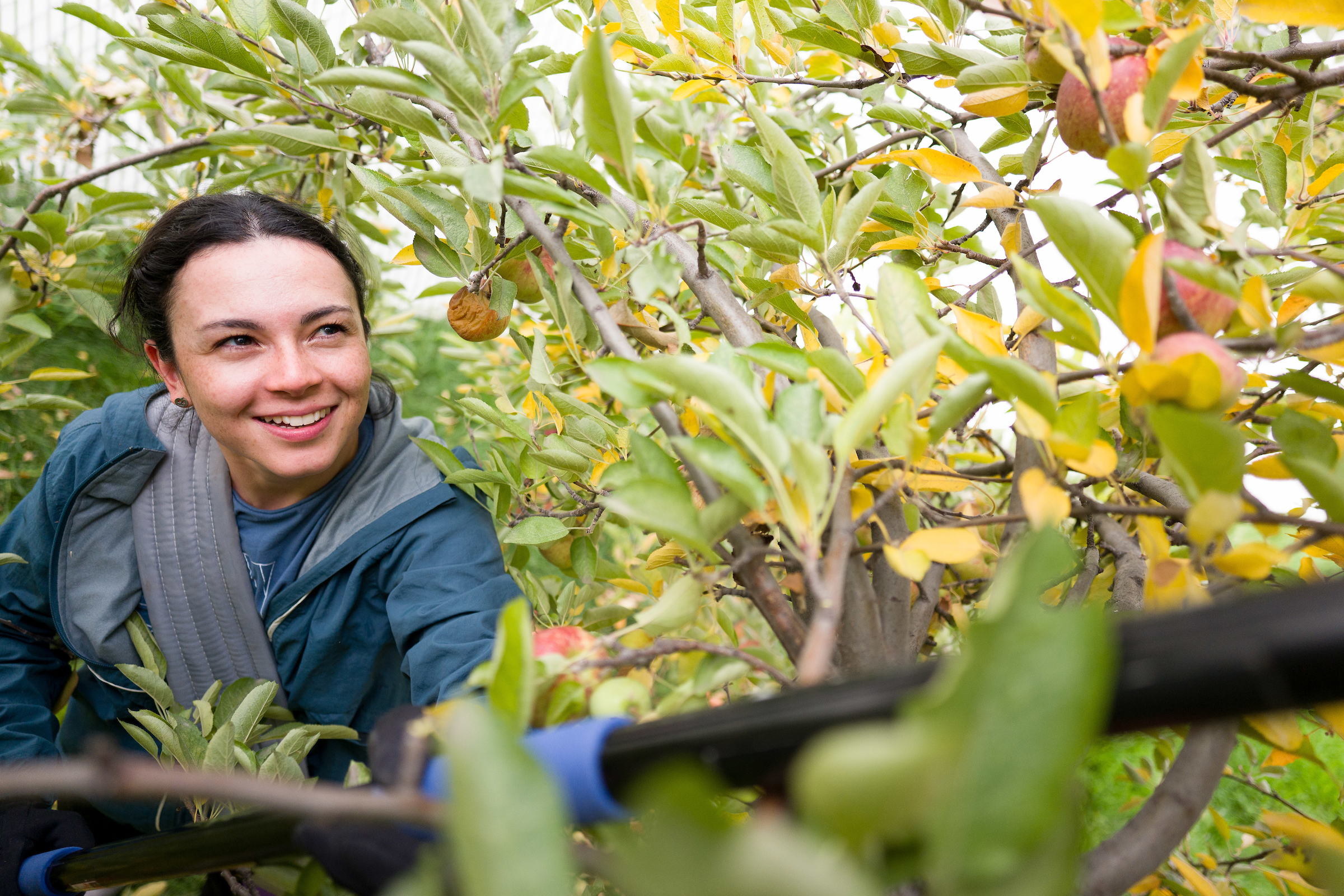
Thanks to Peter Van Well, president of Van Well Nursery in Washington, Larsen is able to get thousands of needed rootstocks from Seattle to Beirut and introduce a myriad of modern apple varieties to Lebanese orchards. Larsen knows which climate and what type of soil is best for each variety; he is concerned with the way every tree is planted, pruned and irrigated. These initial efforts are wasted if apples are injured before going to market, so he also pays close attention to how the apples are harvested, transported and stored.
Deliberate steps like these over the past decade have caused the country's apple industry to blossom. The difference in taste, color and yield of Lebanese apples has brought new vibrancy to the livelihood of apple growers and rejuvenated the nation's agricultural industry.
Quiet and unassuming, the Larsens are embarrassed by attention and do not believe their efforts warrant the spotlight. But according to Stan Cazier, the former president of USU after whom its library is named, Paul Larsen knows more about apples than anyone on earth. Dr. Cazier hired Larsen as Vice President of Extension, and describes him as “very sophisticated and very humble...no matter how old he gets, he just keeps on going.”
It would be difficult to overstate the depth and diversity of Larsen's knowledge. A recognized treasure in the agricultural world, he has a sharp business acumen as well as extensive knowledge of soil science, plant physiology and agricultural economics. Normally, at least 10 experts would be needed to bring the equivalent of Larsen's knowledge to the table.
Working as a volunteer in Lebanon, Larsen refuses to be paid for his time. The Frems, who are self-made millionaires and one of the most powerful families in Lebanon, finance Larsen's work to restore the apple industry. Multiple public projects funded by George Frem included Lebanon's first Christian television station; he was also a longtime member of Parliament and served as Minister of Industry. Paul and Lorna Larsen have become like family to the Frems, who provide everything they need. This includes interpreters, an apartment, even a burly guide to maneuver them through crowded airports – where some have been heard to wonder aloud, “What is an American doing on a plane to Beirut?”
The Frem's foundation is now expertly run by George Frem's daughter, Rania. Her husband is also a member of Parliament, with all of the influence and risk that entails. Despite the fact that members of Parliament are periodically assassinated, the Frems have persevered in their efforts to uplift and strengthen their countrymen. They sponsor several workshops each year where apple growers learn modern methods of orchard management that solve every problem of the industry. Larsen's teachings are translated into Arabic and then distributed to each grower, who returns, enlightened, to regional orchards. At Larsen's request, Lebanese experts are always included in the planning and presentation of workshops.
These seminars are reminiscent of Lebanon's not-so-distant past, when Muslims and Christians lived and worked together in equal proportions. Although there are not historical religious divisions in this land, many Christians have been driven from Lebanon by intense conflict. The Larsens are heartened to see the renewal of a companionable mix of growers from many religious groups working side by side for a common need, a mutual passion. “The characteristics of close family and community ties among the apple growers are typical throughout Lebanon,” the Larsens observe.
Some growers have difficulty accepting change, even when those changes are completely funded by the Frems. One man, unhappy over Larsen “ruining his orchard,” preferred his large, familiar trees and didn't believe the new, smaller trees would produce as much fruit. But a few years after his orchard was replanted, the Larsens visited him and found a true friend running toward their car to offer up a hug of appreciation.
“Look at my trees!” he said, pointing to the laden boughs.
“So you're not still mad at me?” Paul Larsen asked.
“No, no! If it hadn't been for you, I would not have all these apples!”
–more–
Photo Gallery
Mouse over thumbnail for detail


Paul Larsen meets with growers in an old Lebanese orchard.

Accompanying her husband Paul wherever he is needed, Lorna Larsen takes notes and pictures at orchard meetings
throughout Lebanon.

Mindful of Paul Larsen's admonishments, Lebanese apple workers take extra care in packing product for shipment to Egypt.